Conservation Moorings for Marinas & Harbors
Conservation moorings on screw anchors hold as a fixed point: no block to drag into boats in a storm, no chain scouring the eelgrass, and a tighter swing circle, so more boats fit in the same licensed mooring field.
One mooring, in plan, at 6 m depth
At 6 m depth, a block-and-chain mooring swings through about 39 m; a helical mooring through about 20 m.
Water each mooring occupies, in this example73% less
Try other depthsEvery mooring owns a circle of water. Shrink the circle.
A block-and-chain mooring needs a long line from anchor to buoy, and the boat swings through all of it. A screw anchor holds as a fixed point on a shorter line, so the circle is tighter and no ground chain sweeps the bottom inside it.
Water each mooring occupies, in this example73% less
Block and chain39 m swing radius
Screw anchor20 m swing radius
Illustrative geometry, not a site design. Your chart decides the real layout.
How this is drawn
Line length is scope (line length ÷ depth) × depth: 5:1 for block and chain, 2:1 for a screw anchor. Swing radius is the line’s horizontal reach plus a 10 m vessel. The chain-sweep disc shows where the damage happens, not a measured extent. Catenary, tide range and current are ignored.
On record at Pınar Hotel, Erdek
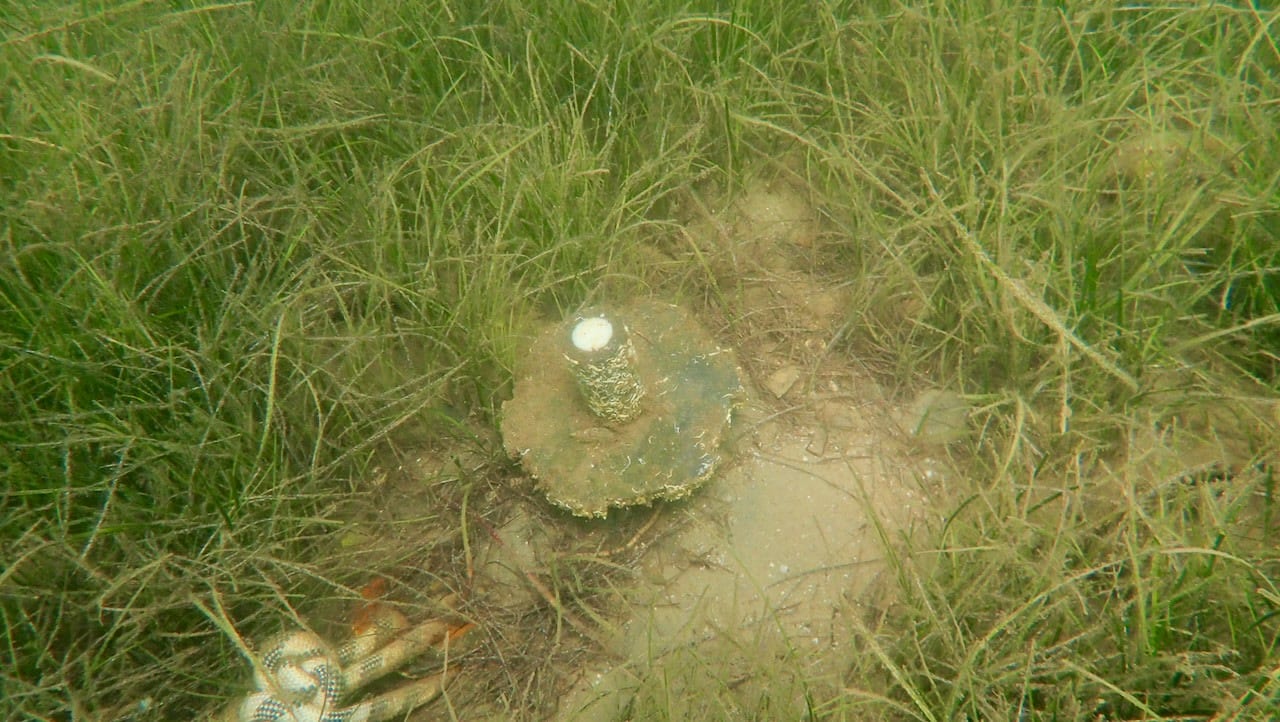
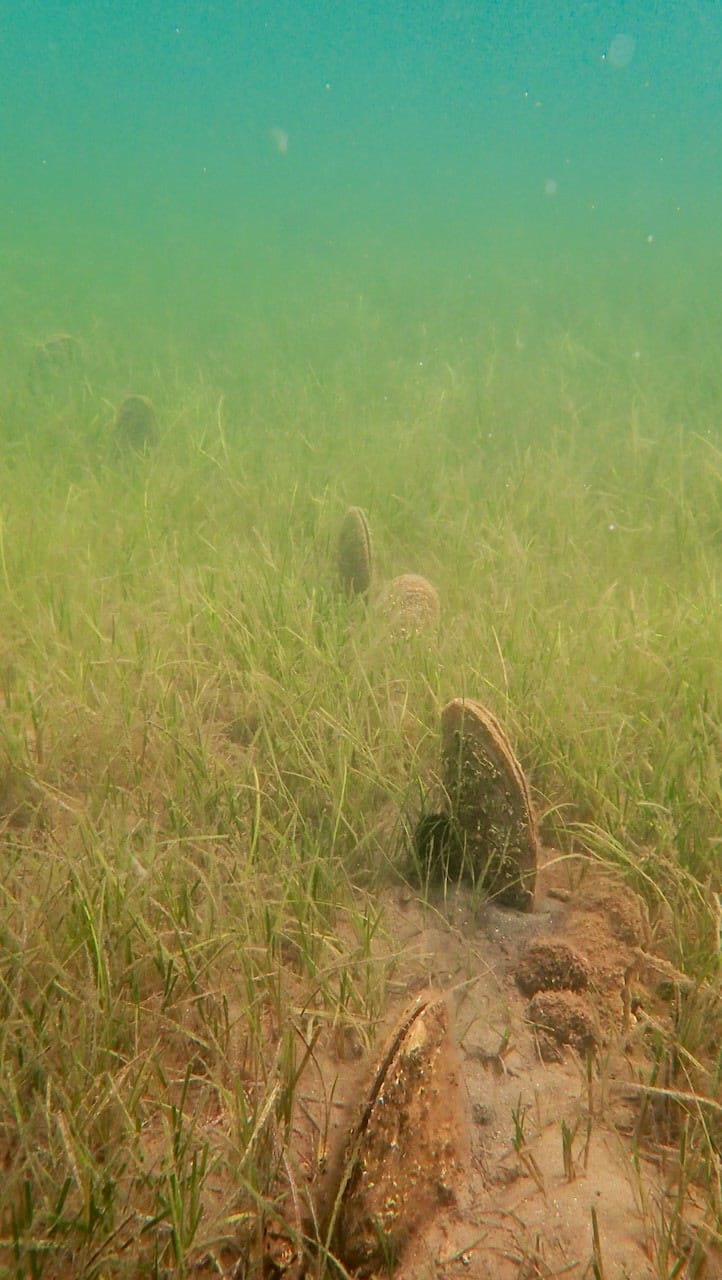
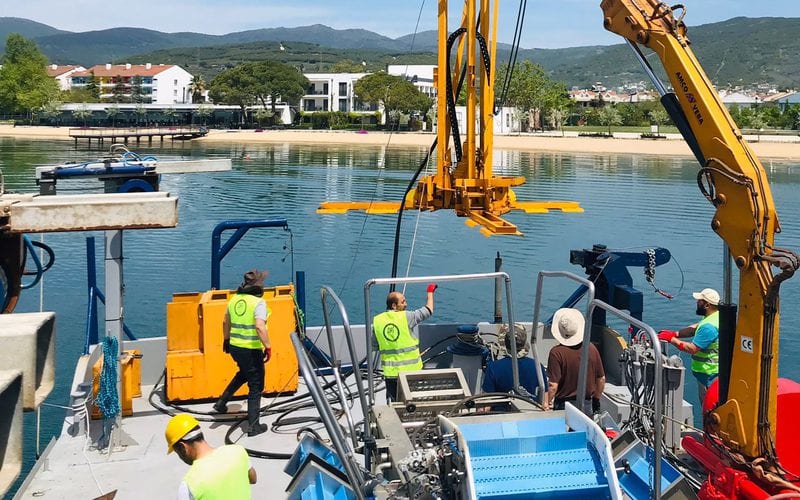
Screw Anchors for Floating Docks in Shallow Water
Pınar Hotel · Erdek, Balıkesir, Türkiye · 2021
- The site
- The hotel needed to secure floating docks in shallow water at a site that is exposed to wind and waves at certain times of year. Concrete deadweights were ruled out on two counts: the exposure, and the shallow depth — blocks heavy enough to hold would have protruded.
- What we installed
- Fourteen screw anchors 2 m long with 60 cm helical plates were installed into loose sand to hold the dock system, each rated to a 4.3 t safe working load established by on-site pull testing. Four further anchors were set in the deeper part of the site to serve boat moorings.
- Where it stands
- All anchors were installed and rated to their design load, with the safe working load confirmed by pull testing on site. The hotel deferred installing the docks themselves, but brought the deeper-water moorings into service for boats.
- Anchors
- 18
- Shaft length
- 2 m
- Helix diameter
- 60 cm
- Safe working load
- 4.3 t
Every figure is taken from the installation record for this job.
How a conservation mooring holds
A conservation mooring is three parts: a screw anchor set into the seabed, a floating rope, and a buoy. The anchor holds by bearing its helix plates against the soil above them, not by its weight, and you get its torque record for every mooring.
What harbor masters ask before they commit
Find out how many moorings your water can hold
Send your harbor chart, current mooring count and permit conditions. An engineer replies within 24 hours with questions and a first read; the full proposal follows within two business days.
Get a Project Estimate