Screw Anchor Moorings for Fish and Mussel Farms
Fish-cage grids are usually moored on steel anchors dragged in on chain, and mussel long-lines on concrete blocks. A screw anchor, also called a helical anchor, is screwed into the seabed instead and takes load the same day.
The same cage grid, moored two ways
Sea area inside the anchors, in this example65% less
See how it is drawnMoored on steel anchors
Where the pull meets the seabed
After every storm, someone on a steel-anchored farm takes the boat out to check whether an anchor has shifted or a line has gone slack. Here is why an anchor can shift.
A steel anchor holds by digging in as it is dragged, so the pull has to reach it almost flat along the bottom. That is what the heavy ground chain is for. Lift the pull and the anchor can break out. A screw anchor is already set at depth, so the line can run straight to it at an angle, and upward pull is taken by the soil above its plates.
Illustrative, not to scale. Your site survey and grid loads set the real layout.
How this is drawn
One mooring leg from each system to the same surface float, at the same water depth. Line angles and chain length are drawn for clarity, not taken from a design. A real cage grid has several legs at every corner.
Same cages. Less sea.
Each mooring leg runs out past the grid to its anchor. On a steel anchor and its chain the leg runs at about 5:1; on a screw anchor, at about 2:1, so the anchor sits about a third as far out. Around a whole grid, it adds up.
Sea area inside the anchors, same grid, in this example65% less
Illustrative geometry, not a farm design. Your site survey and grid loads set the real layout.
How this is drawn
A 2 × 4 grid of 60 m cells at 30 m depth, with one leg from each node on its edge and two from each corner. Leg reach is √(scope² − 1) × depth, at 5:1 for a steel anchor on chain and 2:1 for a screw anchor. The sea area is the rectangle the anchors sit in; the cages show the grid and are not to size. A real grid’s legs, bridles and anchors are sized to its loads.
On a cage grid
Steel anchors vs screw anchors
| Aspect | Steel anchor (500–5,000 kg) | Screw anchor |
|---|---|---|
| When the load direction swings | Set facing one way. If the pull swings round, it can break out and drag before it re-sets. | Holds the same whichever way the line pulls. There is no fluke to turn. |
| Where it ends up | Wherever it sets after dragging in, so its final position varies. | At the coordinates you give us. |
| Getting it there | 0.5 to 5 tonnes of steel per anchor, plus heavy chain for every leg. | Compact steel parts, turned in from a work boat sized to the job. It takes load on the day. |
| Capacity known at install | Only if it is tensioned to a test load after it sets. | Installation torque is recorded for every anchor and converted to a calculated capacity. A pull test confirms it where the project calls for it. |
| Where each one fits | Standard equipment that any anchor-handling vessel can lay, recover and re-lay. | Sand, silt, mud and mixed seabeds, not rock. It needs specialist installation equipment. |
Moored on concrete blocks
Concrete blocks vs screw anchors
Long-line mussel and shellfish farms are usually moored on concrete blocks. A block can go on rock, where a screw anchor cannot; on any other seabed, here is how the two compare.
| Aspect | Concrete block | Screw anchor |
|---|---|---|
| How it holds | By its weight in water and its friction on the seabed. | It is screwed to a set depth, where its helical plates bear against the soil. |
| Holding for its weight | Low. It loses about 43% of its weight in seawater. | Its own weight plays no part in holding. |
| In a storm | Can slide or shift once the pull exceeds its friction on the bottom. | Holds as a fixed point. There is nothing resting on the bottom to drag. |
| Scope (line length ÷ depth) and ground chain | About 5:1, with chain lying on the bottom. | About 2:1, with no ground chain. |
Same lease. Longer lines.
Mooring legs run out past both ends of every line, and every meter of leg is lease that grows nothing. A block needs a long, low leg to hold; a screw anchor holds on a steeper one, so the lines reach further.
Growing line per row, same lease, in this example+62%
Illustrative geometry, not a farm design. Your site survey sets the real scope.
How this is drawn
A 400 × 120 m lease at 20 m depth, end moorings only. Leg reach is √(scope² − 1) × depth, at 5:1 for block and chain and 2:1 for a screw anchor. A real layout also needs side moorings.
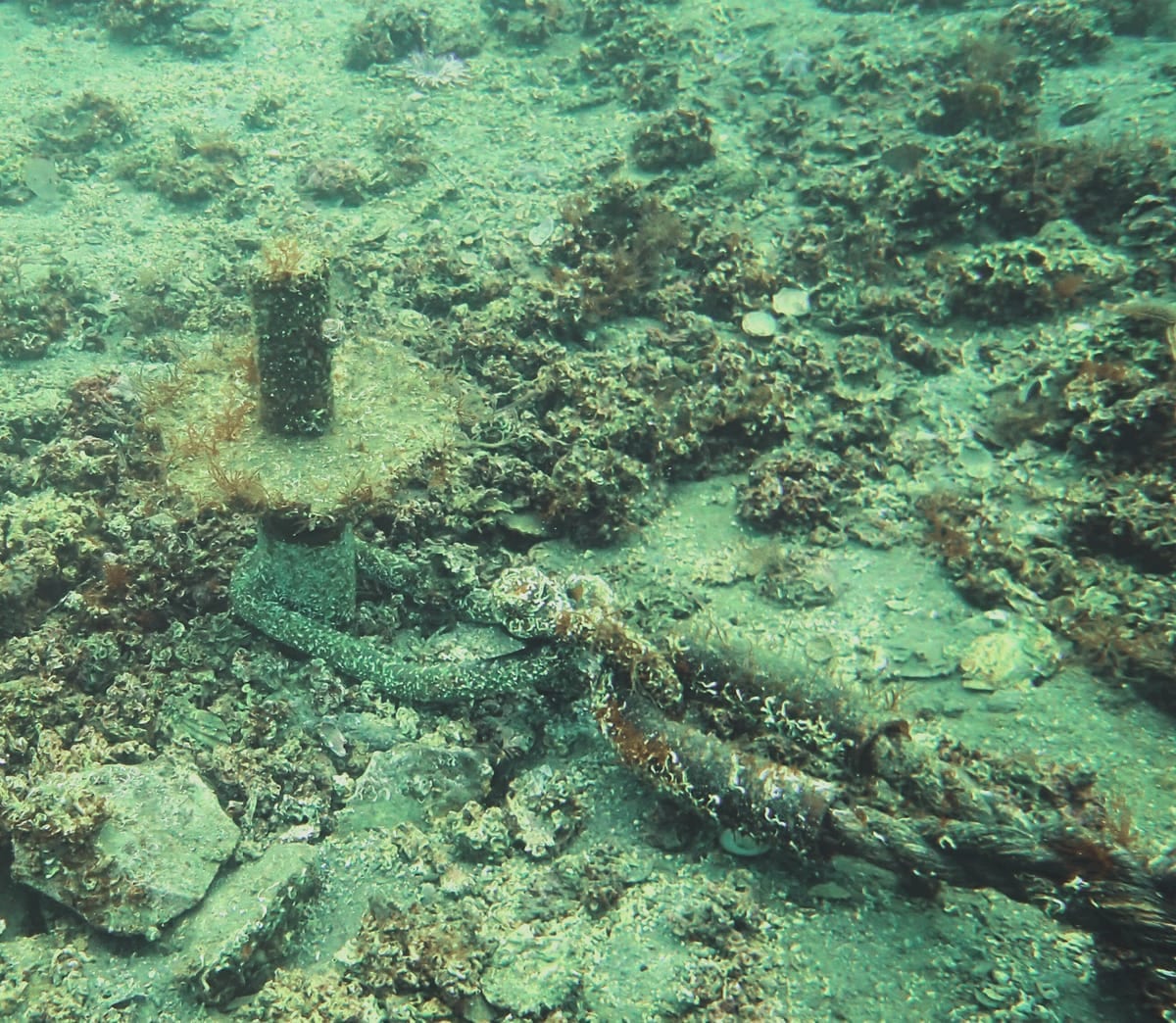
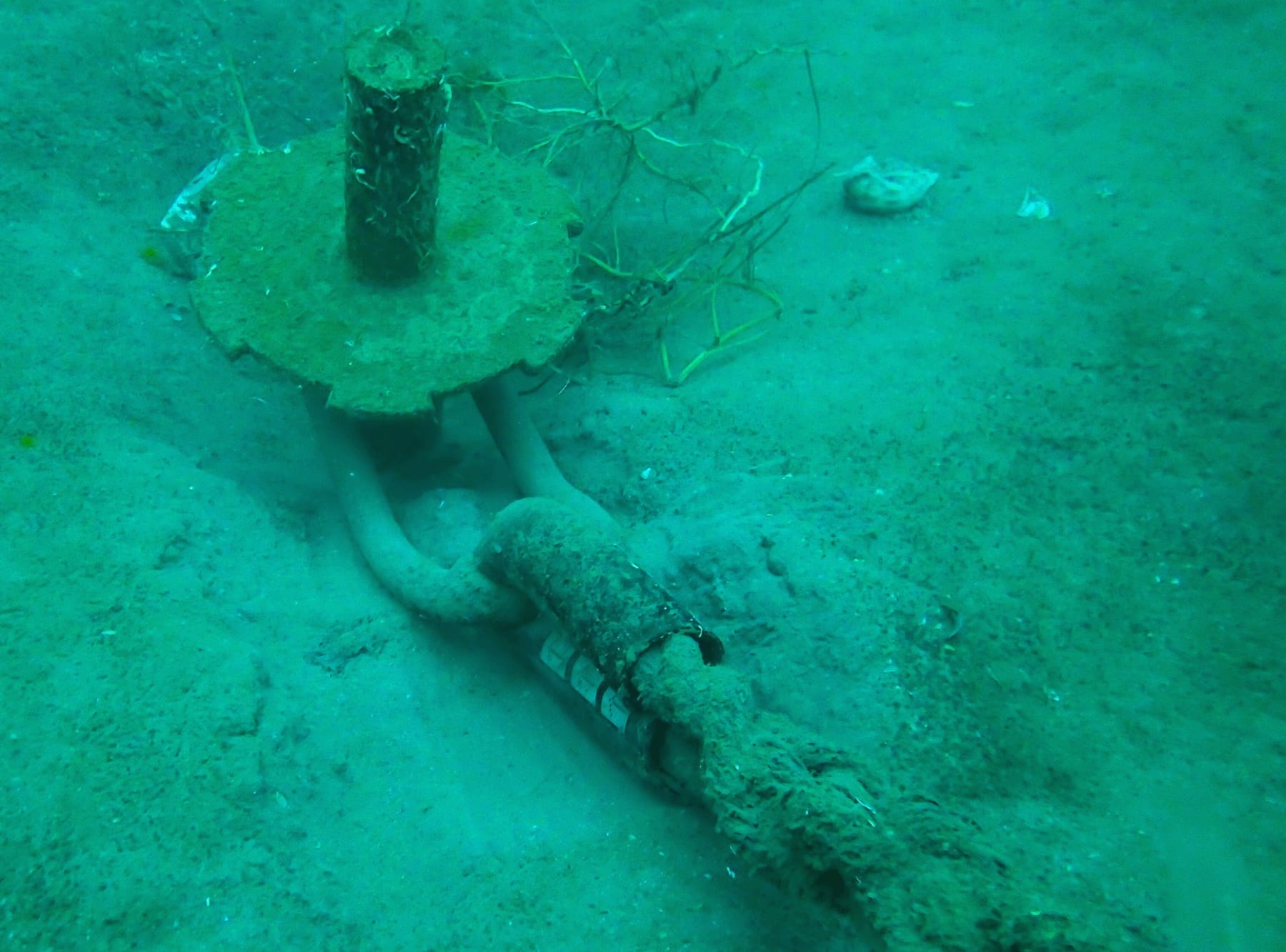
Eight years on a mussel-farm seabed
Specified for your farm
Designed by mussel.pro, installed by Moorix: one company, MusselPro Mühendislik Ltd..
What farm operators ask before they commit
Plan your next farm mooring
Send your farm coordinates, water depths and deployment window. An engineer replies within 24 hours with questions and a first read; the full proposal follows within two business days.
Get a Project Estimate