A Mooring With No Chain on the Bottom
A screw anchor is turned into the seabed, not dug in, and a floating rope takes the place of the ground chain. That makes a conservation mooring workable in eelgrass and Posidonia meadows, where a block-and-chain mooring is not.
Last updated
Same boat, same wind. Only one drags a chain across the meadow.
Every moored boat swings with the tide and the wind. On a block-and-chain mooring the chain swings with it, across the seabed. On a screw-anchor conservation mooring the anchor stays where it was screwed in, and the rope floats above the seagrass.
The screw-anchor buoy swings less because its line can be shorter. The anchor holds as a fixed point, so it needs a line of about 2 times the water depth, against 5 times for block and chain.
Block and chain
- The block rests on the meadow and crushes and smothers the seagrass under it.
- The ground chain lies on the bottom and drags across it every time the tide or wind turns the boat, keeping a ring around the mooring bare. The longer the chain, the wider the ring.
- Where the block shifts and drags, it digs a hollow that traps algae and detritus. As that decomposes the hollow runs out of oxygen, and seagrass struggles to grow back in it.
Screw anchor conservation mooring
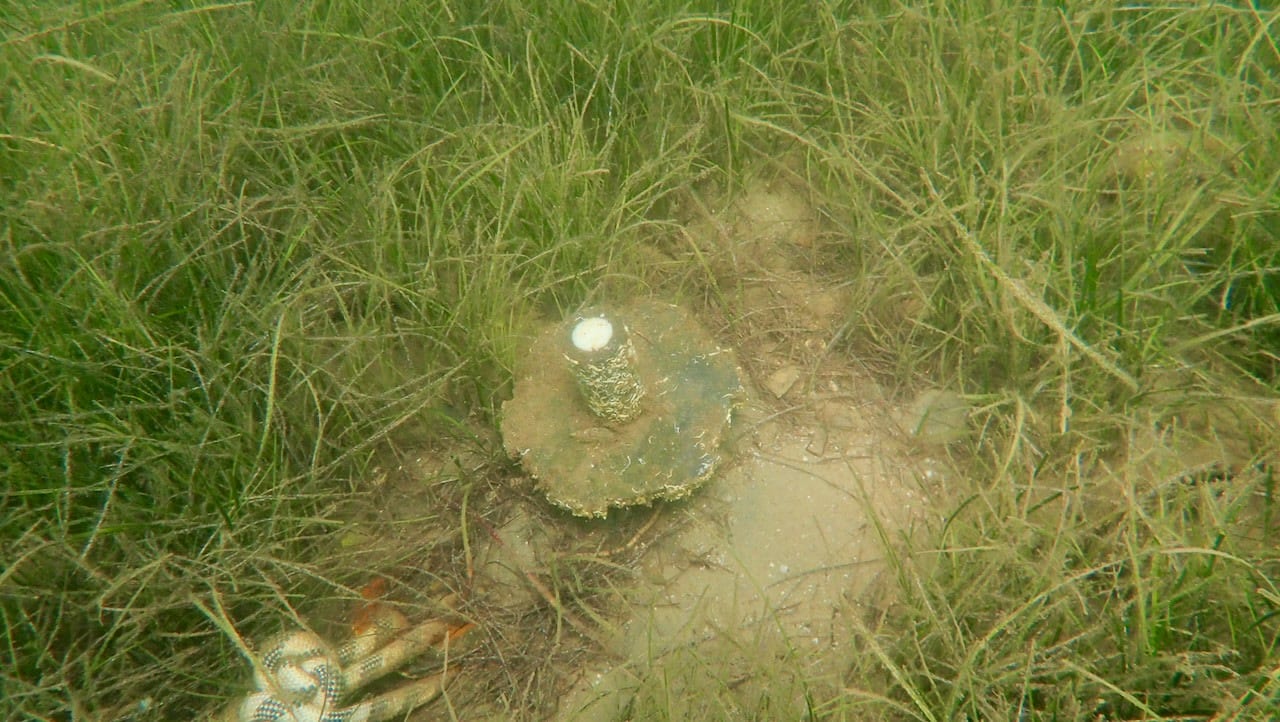
- The anchor head is the only fixed part at the seabed, and the rope is tied on here with a short slack length. A small patch beside the head can stay bare: in the photograph further down, one about the size of the head plate. A patch, where block and chain keep a ring.
- Beyond that the rope floats. It swings with the boat through the water, not across the bottom, so a ring a chain once kept bare is free to grow back.
- The helix plates are screwed into the soil by rotation: no excavation, no spoil, and no hollow left behind.
Schematic section, not to scale. Your site survey decides the real layout.
How this is drawn
Depth is exaggerated and both lines are drawn shorter than their real scope so the two moorings fit one frame; the buoys’ swings keep their proportion to each other. Seagrass is drawn as an even meadow; a real bed is patchier.
Why seagrass meadows are protected
Eelgrass (Zostera marina) along Atlantic and Pacific coasts, and Posidonia oceanica in the Mediterranean, form meadows that do work nothing else on the seabed does. That is why they carry legal protection, and why a mooring in or beside one gets a closer look from the permitting authority.
What a meadow does
- Nursery ground for juvenile fish and invertebrates.
- Stores carbon in the sediment beneath it.
- Slows the water, so suspended sediment settles and the water clears.
- Binds the seabed with roots and rhizomes, which holds it against erosion.
How it is protected
- United States
- Vegetated shallows, eelgrass beds among them, are Special Aquatic Sites (opens in a new tab) under the Clean Water Act Section 404(b)(1) Guidelines, which brings added scrutiny to permits for work that affects them. Seagrass is also designated Essential Fish Habitat (opens in a new tab) in several regional fishery management plans under the Magnuson-Stevens Act.
- European Union
- Posidonia oceanica beds are a priority natural habitat type (1120*) in Annex I of the Habitats Directive (opens in a new tab). Several Mediterranean states add national or regional rules, including restrictions on anchoring over Posidonia.
- Elsewhere
- Rules differ by country and by jurisdiction, so we do not promise a permit outcome.
Wherever you apply, you get the installation records, torque logs and system specification for every anchor we set, to support your permit application.
What the anchor leaves in the water
The anchors are hot-dip galvanized: a zinc coating bonded to the steel. Zinc protects the steel by corroding first, so over the life of the coating it releases zinc into the water around the anchor, slowly. Zinc occurs naturally in seawater; whether the release matters at your site is a question for its environmental assessment, and we give you the full coating specification to answer it.
Seagrass around an anchor in service
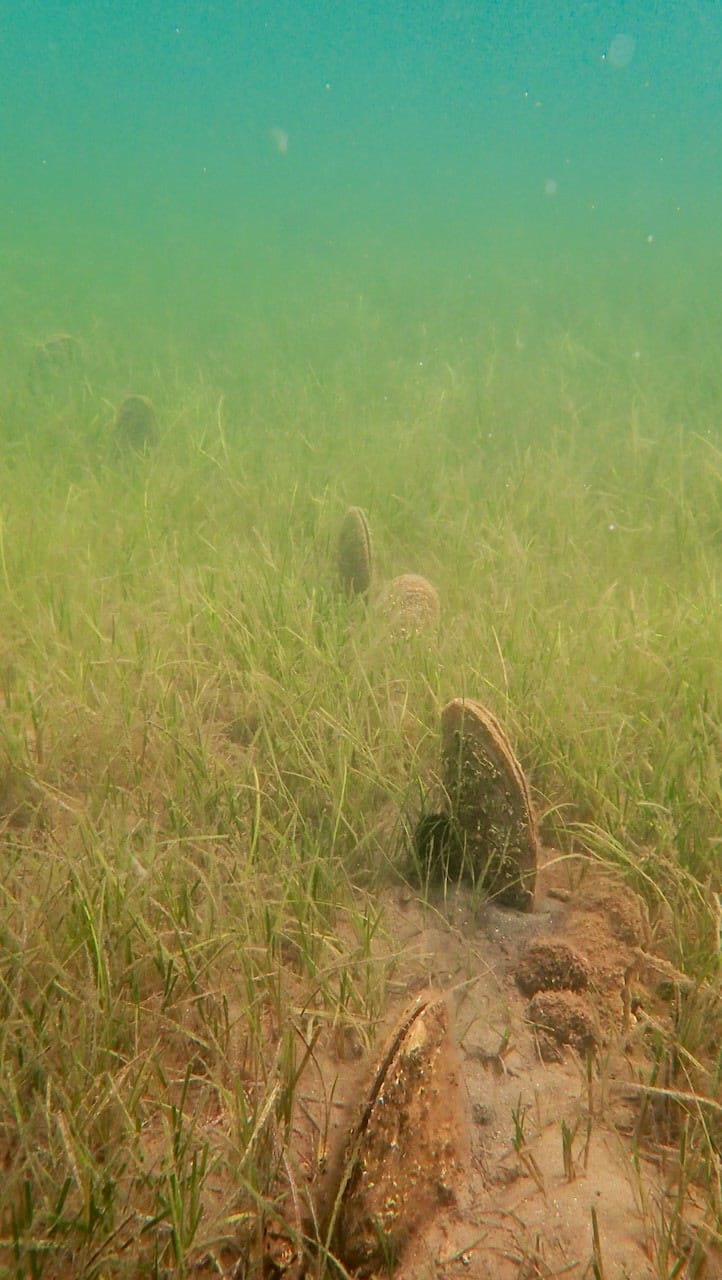
A photograph shows the anchor and the meadow side by side, not that one caused the other. The job was anchoring for floating docks and boat moorings in shallow water, not a conservation-mooring field; the full record is on the marina page.
Specifying a mooring for a sensitive seabed?
Send the site: depth, seabed type, loads, and any habitat survey or permit conditions. An engineer replies within 24 hours with questions and a first read; the full proposal follows within two business days.
Get a Project Estimate